

Preoperative optimization of adult patients undergoing surgery for scoliosis, kyphosis, or spinal deformity is one of the most important — and often underappreciated — factors in achieving good surgical outcomes. A patient who enters the operating room in poor nutritional status, with undertreated osteoporosis, or with uncontrolled diabetes faces meaningfully higher risks of complications, hardware failure, and poor fusion than a patient who has been carefully optimized before their procedure.
Our recent systematic review, published in Spine (March 2024), provides a practical, evidence-based framework for physicians managing patients in the preoperative period ahead of adult spinal deformity surgery.
Key Modifiable Risk Factors
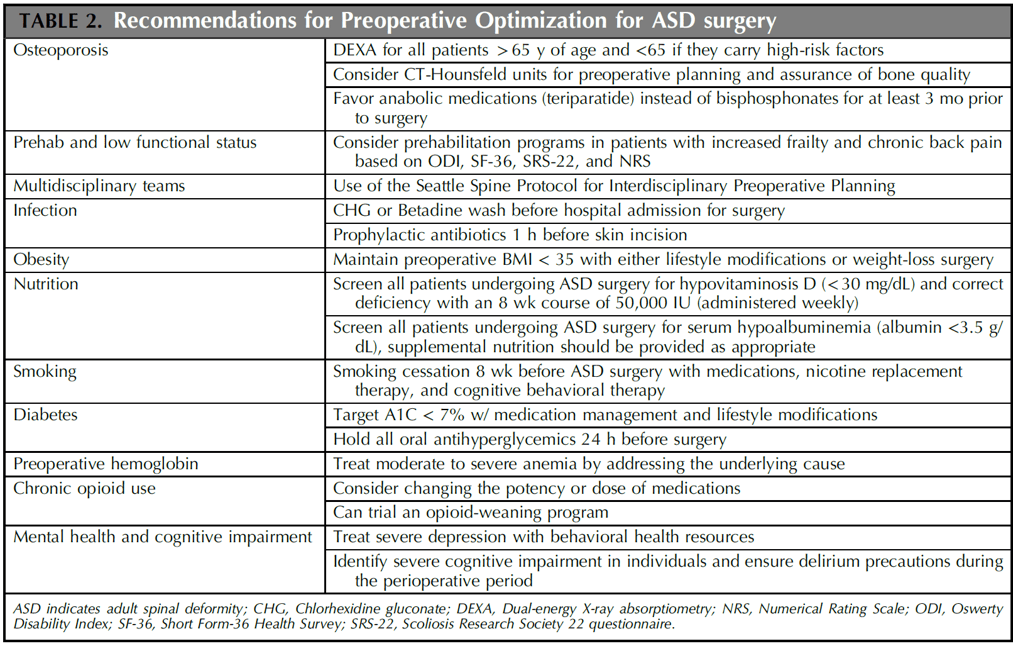
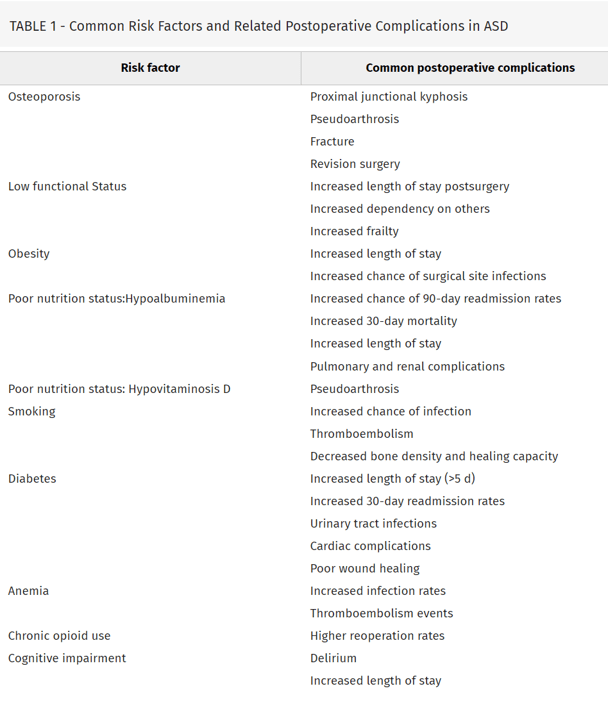
The review identifies and synthesizes the evidence on the following modifiable risk domains:
- Osteoporosis — bone quality directly affects pedicle screw purchase and fusion rates; medical treatment before elective deformity surgery is strongly supported
- Prehabilitation — structured exercise and physical therapy in the weeks before surgery improves functional reserve and recovery
- Functional status — frailty is an independent predictor of complications; formal frailty assessment should be part of pre-surgical evaluation
- Multidisciplinary screening — cardiology, pulmonology, and internal medicine involvement for complex patients
- Infection risk — skin, dental, and urinary sources should be addressed before elective surgery
- Obesity — associated with higher wound complication and pseudarthrosis rates; weight optimization where feasible
- Nutrition — albumin and prealbumin levels predict wound healing and fusion; nutritional deficits should be corrected preoperatively
- Smoking — a well-established independent risk factor for pseudarthrosis and wound complications; cessation is strongly recommended
- Diabetes — hemoglobin A1c optimization reduces infection and wound complication risk
- Blood loss management — preoperative anemia treatment and autologous blood donation strategies
- Opioid use — chronic opioid use is associated with worse patient-reported outcomes; tapering protocols where appropriate
- Psychosocial factors — depression, anxiety, and catastrophizing affect both recovery and satisfaction; screening and treatment before surgery improves outcomes
The central finding of the review is that systematic, proactive optimization across these domains — ideally coordinated through a multidisciplinary preoperative clinic — can meaningfully reduce complication rates and improve functional outcomes after adult spinal deformity surgery.
Full citation: Katiyar P, Reyes J, Coury J, Lombardi J, Sardar Z. Preoperative Optimization for Adult Spinal Deformity Surgery: A Systematic Review. Spine. 49(5):304-312, March 1, 2024. DOI: 10.1097/BRS.0000000000004823
This post is for educational purposes only and does not constitute individualized medical advice.
 Sardar Spine | NYC Spinal Deformity & Scoliosis Surgeon