
The body is a complex machine that often compensates to maintain balance. Our recent study sheds light on the importance of global alignment and lower extremity compensation.
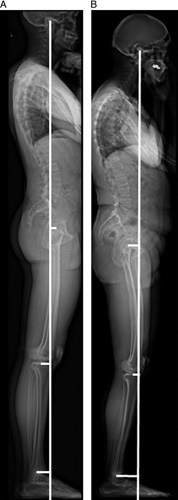
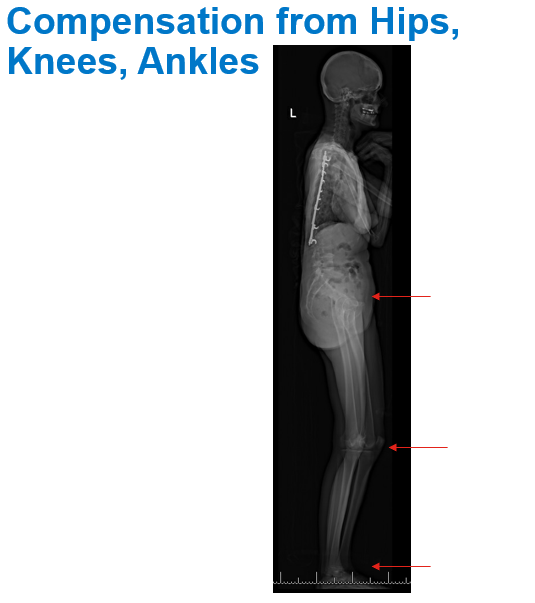
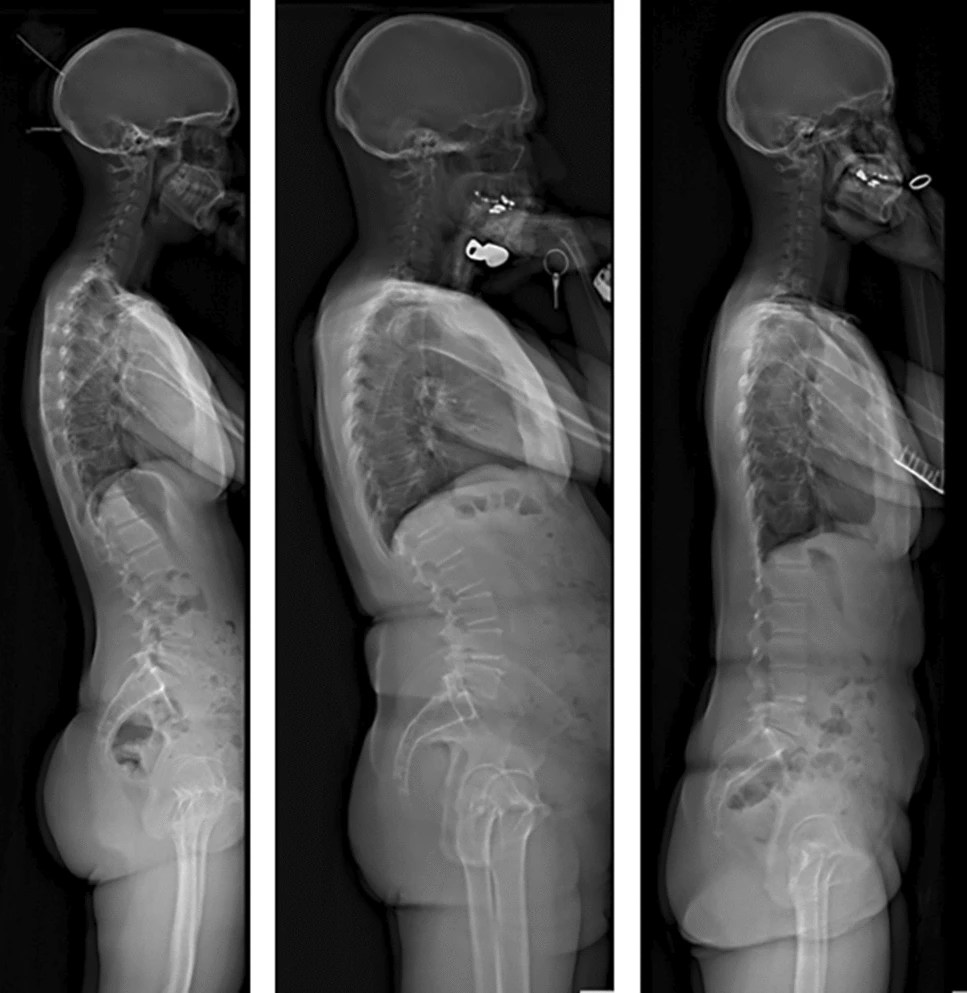
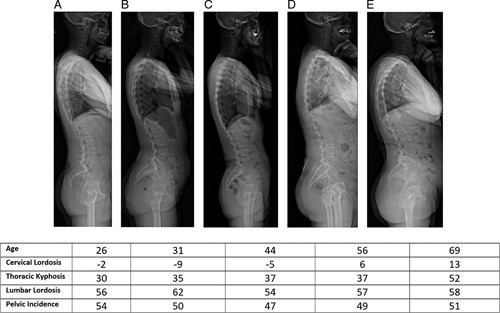
We found that asymptomatic volunteers used compensatory mechanisms such as slight pelvis retroversion, knee flexion, and neck extension to maintain an aligned sagittal posture with their head centered over their knees (Not the pelvis).
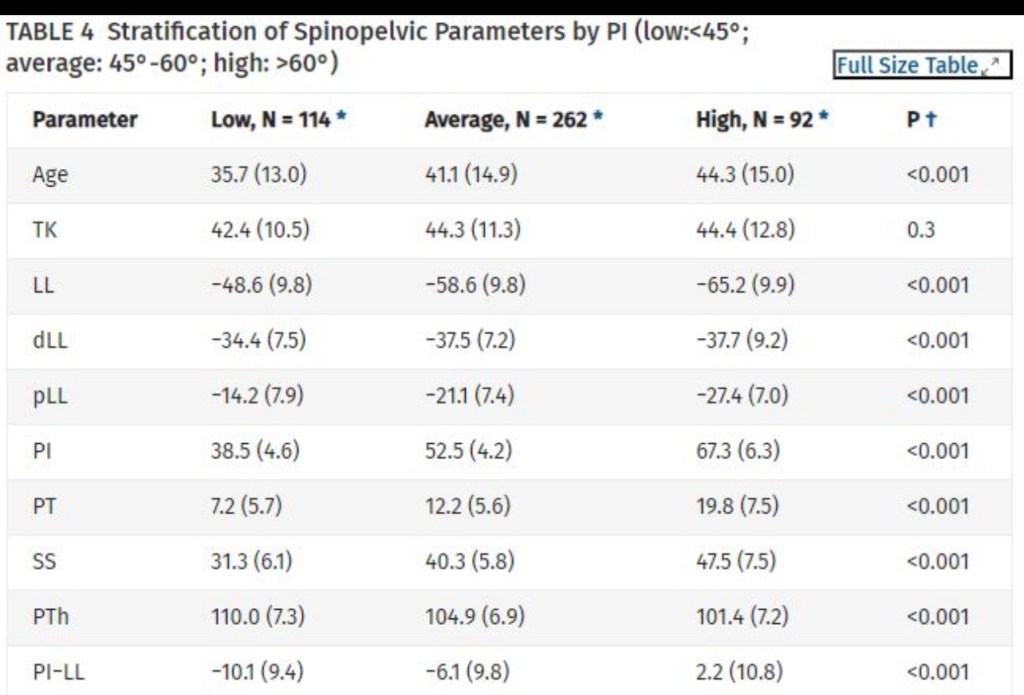
In asymptomatic volunteers, sagittal alignment parameters saw a slow and steady change across age groups most exemplified by an increase in Thoracic kyphosis, while lumbar lordosis did not show a significant decrease across age groups.
Read the full article: Age- and Gender-based Global Sagittal Spinal Alignment in Asymptomatic Adult Volunteers: Results of the Multiethnic Alignment Normative Study (MEANS)
https://pubmed.ncbi.nlm.nih.gov/35797648/
Sagittal alignment of a 26-year-old volunteer (A) and a 68-year-old volunteer (B). The figure is representative of the volunteer population as it shows a higher thoracic kyphosis in the older volunteer while maintaining the odontoid-knee distance by using compensatory mechanisms such as slight knee flexion and cervical extension.
#neurosurgery #physicaltherapy #chiropractor #spine #spinehealth #spinesurgery #scoliosis #scoliosissurgeon #spinedeformity #spinaldeformity #idiopathicscoliosis #degenerativescoliosis #kyphosis #flatback #spinalalignment
 Sardar Spine - Top Spinal Disorders Surgeon