A Multi-Ethnic Alignment Normative Study (MEANS)
Spinal alignment is determined by more than just the PI or SS.
We compared individuals from three main races: Asian (A), Arabo-Bèrbère (B), and Caucasian (C).
Key points:
-Pelvic morphology including pelvic incidence (A: 51.0, B: 52.0, C: 52.5, p = 0.37), pelvic tilt (A: 11.9, B: 12.3, C: 12.9, p = 0.44), and sacral slope (A: 39.1, B: 39.7, C: 39.6, p = 0.77) were similar amongst the 3 races
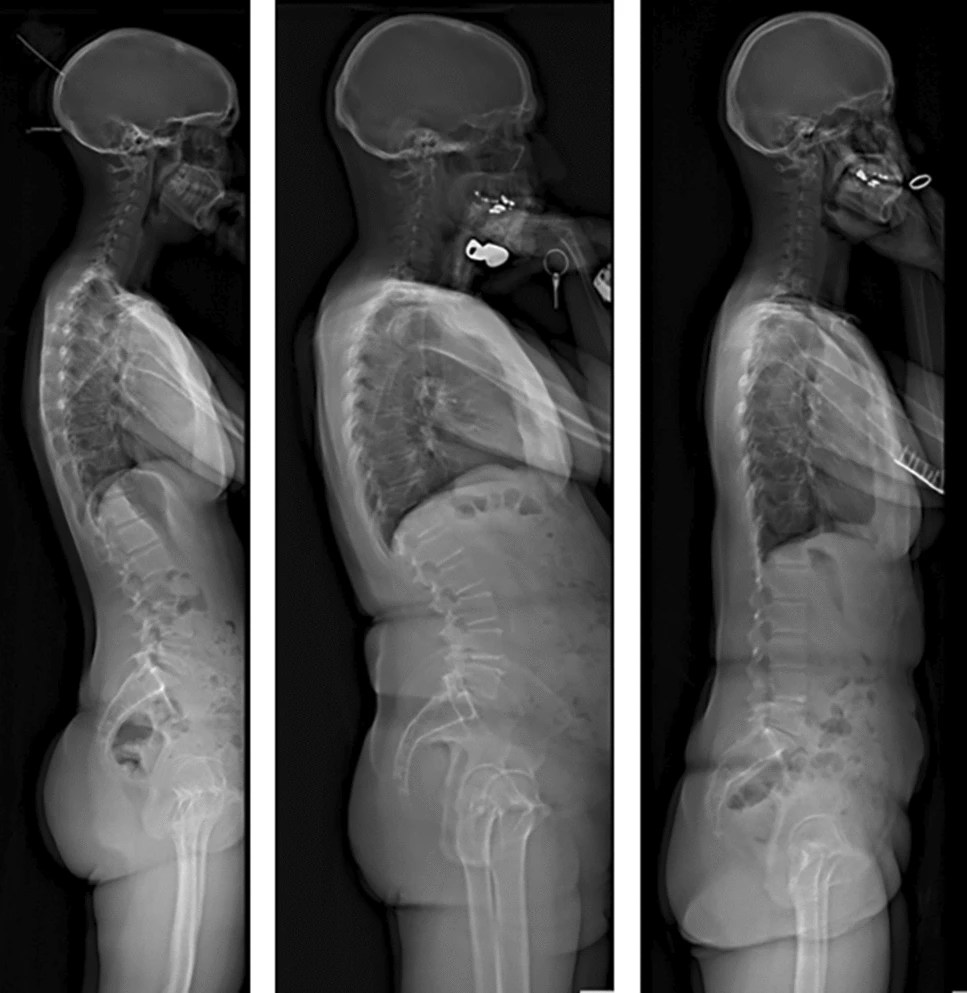
– Thoracic Kyphosis (A: 32.9, B: 43.3, C: 40.0, p < 0.0001) and Lumbar lordosis (A: – 54.2, B: – 60.4, C: – 59.6, p < 0.0001) were lower in Asians compared to Caucasian and Arabo-Bèrbère volunteers despite having similar PI, PT, SS.
– The spine community has placed a lot of emphasis on the pelvis and not enough on the harmonious relationship between the lumbar spine and the thoracic spine
– There are likely genetic, environmental, cultural factors that determine the thoracic kyphosis and the eventual lumbar lordosis in addition to the influence of the pelvis.
– We need to start thinking of the PI LL TK mismatch instead of just the PI LL mismatch.
Read the full article: Sagittal spinal alignment varies with an individual’s race: results of the multi-ethnic alignment normative study (MEANS)
https://pubmed.ncbi.nlm.nih.gov/37428432
#neurosurgery#physicaltherapy#chiropractor#spine#spinehealth#spinesurgery#spinesurgery#scoliosis#scoliosissurgeon#spinedeformity#spinaldeformity#idiopathicscoliosis#degenerativescoliosis#kyphosis#flatback#spinalalignment
Here are lateral X-rays of three asymptomatic volunteers with similar pelvic morphology (Pelvic Incidence, Pelvic Tilt, Sacral Slope) but different cervical lordosis, thoracic kyphosis, and lumbar lordosis, leading to different spinal shape
 Sardar Spine - Top Spinal Disorders Surgeon